On platforms like Meta, TikTok and Snapchat, targeting has become broad and automated. What most separates a profitable campaign from an expensive one is the creative: the image, the video, the hook and the message. Testing creatives properly is how you find ads that work and avoid the ones that do not.
This framework gives you a repeatable system: what to test, how to structure it, how long to run it and how to learn from results.
Why random testing fails
Many teams launch a handful of ads, see one perform better and assume they know why. Without a clear hypothesis and one changing variable, you cannot tell whether the hook, the offer, the format or luck made the difference.
The creative hierarchy
Test the biggest levers first, then refine.
- Offer and angle: what you promise and why it matters.
- Hook: the first line or first seconds that stop the scroll.
- Format: video, image, carousel, UGC style or animation.
- Proof: reviews, results, demonstrations.
- Call to action and details: wording, button, urgency, price display.
Write a hypothesis for every test
A good hypothesis is specific: 'A customer testimonial hook will have a lower cost per lead than a product demo hook for this audience.' When the test ends, you learn something even if the hypothesis was wrong.
Structure of a test
- One campaign for the test with a clear objective.
- One ad set, or one per audience, with the same targeting.
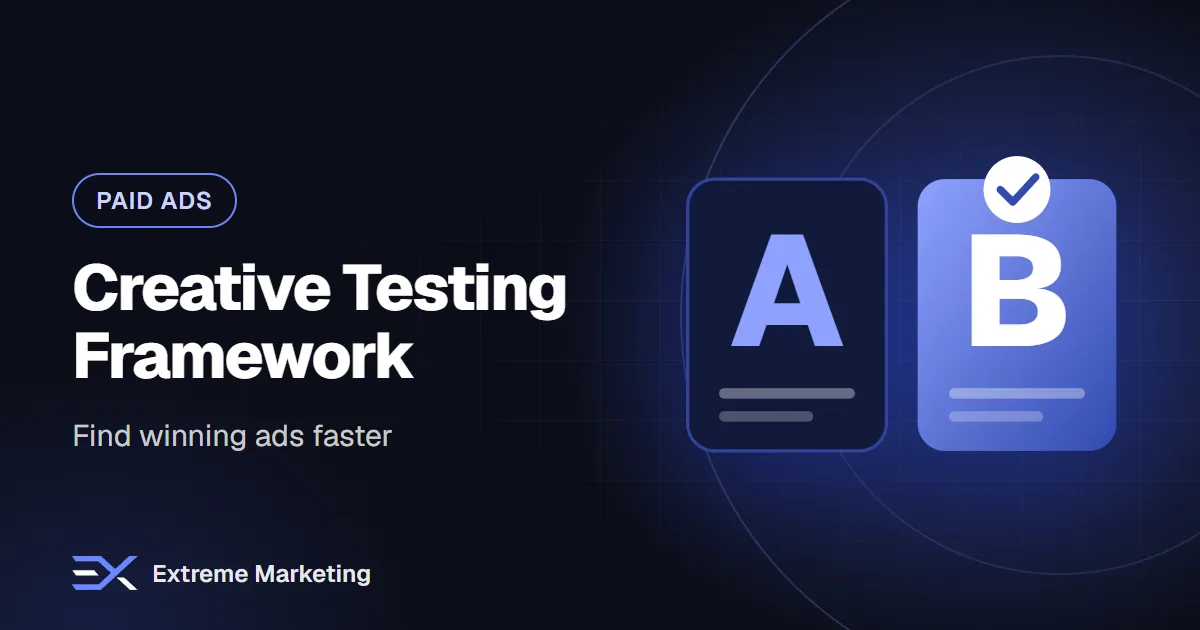
- Three to five ads that differ in a single variable.
- Equal opportunity: same budget, schedule and landing page.
- A defined success metric, such as cost per lead or cost per purchase.
How long and how much
Allow enough time and budget for each ad to receive a meaningful number of impressions and results. Judging after a day or two is a common error. Many teams run a test for at least a week and look at trends rather than hourly swings.
Types of tests
Concept tests
Completely different ideas: pain-point versus aspiration, price versus quality, before and after versus testimonial.
Hook tests
Same concept, different opening lines or first three seconds.
Format tests
Same message as a static image, a short video and a carousel.
Language tests
Arabic versus English versus bilingual versions, written natively rather than translated.
A weekly testing routine
- Monday: review last week's results and write the next hypothesis.
- Tuesday and Wednesday: produce the new creatives.
- Thursday: launch the test.
- Friday to next Wednesday: let the test run without edits.
- Thursday: decide winners, record learnings, plan the next test.
How to read results
- Compare the metric that matches your goal, not only click-through rate.
- Look at cost per result and at quality: do these leads become customers?
- Be cautious with small differences. If results are close, call it a tie.
- Check whether the winner works across placements and audiences.
- Keep winners running, and use their lessons in new variants.
Creative fatigue
Even winning ads wear out as the same people see them repeatedly. Watch frequency and falling click-through rates, and prepare new variations before performance drops. Refreshing the hook or visuals of a winning concept can extend its life.
Keep a learning library
Record each test: the hypothesis, the creatives, the result and the lesson. After a few months, you will know what your audience responds to, which is a competitive advantage that does not disappear.
Common mistakes
- Testing too many variables at once.
- Stopping tests too early.
- Choosing winners by likes rather than business results.
- Never retiring tired ads.
- Copying competitors without understanding why their ads work.
Frequently asked questions
How many creatives should I test at once?
Three to five per ad set is usually enough for small budgets. More dilutes your spend.
Should I test on cold or warm audiences?
Start with cold audiences for new concepts, then validate winners on warm audiences.
Can I test without video?
Yes. Static images and carousels are cheaper to produce and can perform well, but short video often earns attention.
Our paid social team plans and produces creative tests in Arabic and English. Message us on WhatsApp or book a free 30-minute call.
Want help putting this into practice?
Book a free audit and we will review your marketing and suggest the quickest wins.