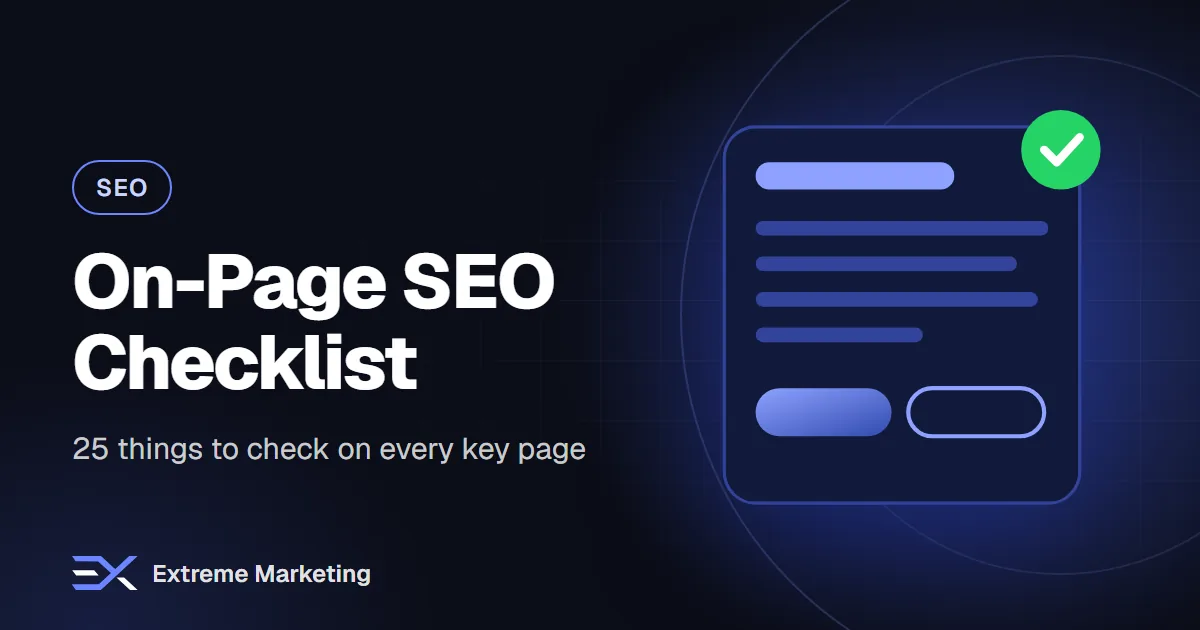
On-page SEO means improving the elements on a page so that search engines and people understand it and find it useful. Unlike backlinks or algorithm updates, these elements are fully under your control. A careful pass through your most important pages can make a real difference.
Use this checklist for your main service pages, product pages, location pages and key articles. Tick off each item, fix the gaps and move on.
A. Search intent and content
- The page targets one main topic or keyword with a clear intent.
- The first paragraph answers the main question or states the offer clearly.
- The content is genuinely useful, accurate and original, not copied or thin.
- It covers the subtopics people expect: process, pricing context, locations, frequently asked questions.
- It is written in clear language for your audience, in Arabic or English or both.
- It is kept up to date: prices, opening hours, offers and facts.
B. Title tag and meta description
- Each page has a unique title that includes the main phrase near the start.
- The title is clear and appealing, and not stuffed with keywords. Keep it to a length that is not cut off in results.
- Each page has a unique meta description that summarises the page and invites a click.
- Titles and descriptions are honest and match the page content.
C. Headings and structure
- There is one clear main heading (H1) that describes the page.
- Subheadings (H2, H3) organise the content logically and include related phrases naturally.
- Paragraphs are short, and lists and tables are used where they help.
- A table of contents or clear sections help on long pages.
D. URLs
- URLs are short, readable and descriptive, with words separated by hyphens.
- They avoid unnecessary parameters, dates and long strings.
- Once published, URLs are not changed without a redirect.
E. Images and media
- Images are relevant, high quality and compressed to load quickly.
- File names are descriptive rather than 'IMG_1234'.
- Every meaningful image has useful alt text that describes it, which helps accessibility and search.
- Videos have captions or a transcript where possible.
- Images have set dimensions to avoid layout shifts.
F. Internal and external links
- The page links to related pages on your site with descriptive anchor text.
- Important pages receive links from several other pages.
- External links point to reliable sources where they genuinely help the reader.
- There are no broken links.
G. User experience and speed
- The page loads quickly on mobile networks.
- The layout works well on phones: readable text, tappable buttons, no horizontal scrolling.
- Pop-ups and banners do not block the content.
- The main action, such as call, WhatsApp or booking, is easy to find.
- Right-to-left layout works correctly on Arabic pages.
H. Trust and credibility
- Contact details, address and business information are visible and consistent.
- Reviews, certifications or case studies are shown where true and permitted.
- Authors or the business behind the content are identified on articles.
- Privacy and terms pages are accessible.
- The site uses HTTPS.
I. Structured data
- Add structured data where relevant: organisation, local business, product, article, FAQ or breadcrumbs.
- Make sure the markup matches the visible content.
- Test the markup with Google's testing tools.
J. Language and international signals
- The page language is set correctly in the HTML.
- Arabic and English versions are linked with hreflang tags.
- Each page has a canonical tag pointing to the preferred version.
- The sitemap lists all important pages in each language.
How to run the checklist
- List your ten most important pages: those closest to revenue.
- Check each page against the list, one section at a time.
- Fix quick wins first: titles, headings, alt text and broken links.
- Then improve content depth and internal links.
- Record the changes and the date.
- Check Search Console after a few weeks for impressions and clicks.
Common on-page mistakes
- Duplicate titles across many pages.
- Several pages targeting the same keyword.
- Thin pages with a few lines of text.
- Keyword stuffing that makes the text hard to read.
- Hiding important text in images.
- Ignoring mobile layout.
- Outdated information that harms trust.
Frequently asked questions
How long should a page be?
Long enough to answer the question fully and no longer. There is no magic word count.
How often should I update pages?
Review key pages every few months and whenever facts change.
Do meta keywords matter?
No. Search engines do not use the old meta keywords tag in the way people once believed.
Our SEO team audits your key pages and fixes on-page issues in Arabic and English. Message us on WhatsApp or book a free 30-minute call.
Want help putting this into practice?
Book a free audit and we will review your marketing and suggest the quickest wins.